


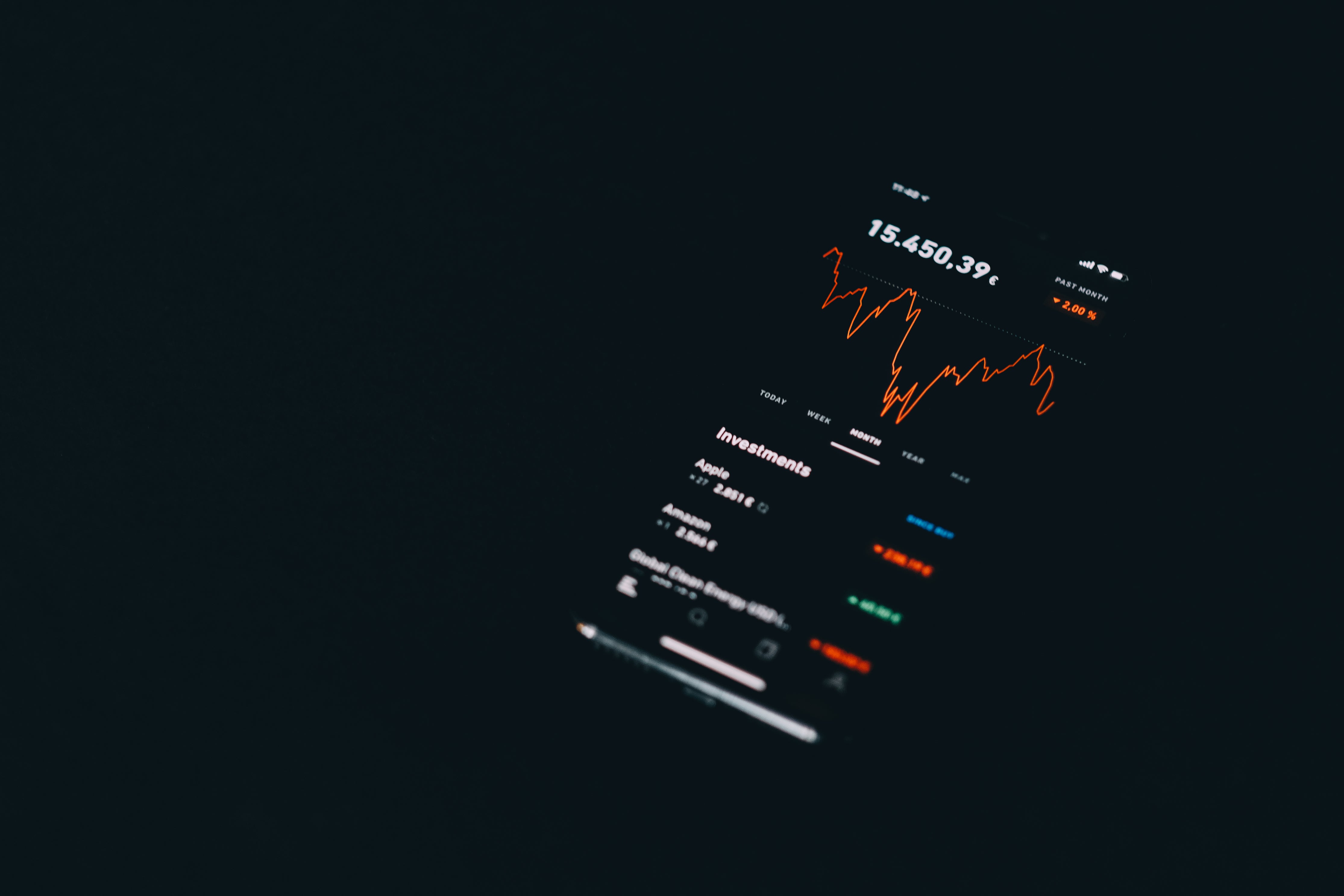
Social Media, as with most things, distorted my limited understanding of the stock market.
Drawn to its apparent simplicity and the misrepresented promise of quick riches, I was interested in trying it for myself. Convinced by various content on social media I was also misled into thinking that the stock market was a get-rich-quick scheme. In fact, the concept of trading was portrayed as so simple that it seemed like an obvious skill to me. That is, until I tried it myself.
My First Thoughts & Experiences
Trading Accounts & Preperation
Eager to 'make money', I asked my dad to set up a brokerage account for me, which surprisingly turned out to be a more challenging process than anticipated. However, the closer we got in setting up my DEMAT account, the more I realized I was about to deal with real money, and not my naive and false perception of it being generated out of thin air. I decided to prepare for this by watching the short 'beginners course' created by Zerodha, which helped me understand how to navigate the brokerage account. Along with it, I watched various other videos as well, all of which were to no avail.
With each 'beginners course' outlining different 'basics' of the stock market, I was barraged with seemingly intricate and unnecessary details. I quickly realized that real trades required far more research than I had originally thought. They involved interpreting various financial indicators and even then, having to deal with the uncertainty that nothing is assured in the stock market.
My First Stock Trade
My confusion didn't make it any easier to pick my first stock trade either. My father suggested I look into Vodafone Idea (IDEA), where light research showed that in order to prevent a duopoly between Airtel and Jio Reliance, the government was offering increasing support to Vodafone. Additionally, despite Vodafone's weak financials, bulk orders from large clients like GQG partners were observed, proving Vodafone to be a promising first investment.
Trades of just 20 stocks seemed risky at the moment, but that first investment was exhilarating nonetheless. I was no longer dealing with theoretical concepts but with real cash. Watching prices rise and fall momentarily gave me highs that made me ecstatic and stress that made me feel like my hair was falling off my head. Although, I felt secure knowing that prices were projected to rise from Rs.16 to around Rs. 25 in the following months.
Learning The Hard Way
When I first bought the Vodafone shares, the price dropped mid-day, only to rise again soon after. I naively expected this pattern to repeat daily, and having purchased on the dip, I felt like I had already cracked the code. This fueled my misinterpretation of the stock market's simplicity. However, I soon learned the hard way that the stock market doesn't operate on such predictable cycles. When I bought at a lower price again, it didn't recover but rather dropped further. I realized that I needed to gain a deeper understanding before I invested any more money.
Throwing myself in hours of research, I was bombarded with even more jargon like "moving averages,"" and "PE ratios" that I'd never heard before. This was overwhelming to me, and I soon began to understand that there was a real science behind trading that required extensive knowledge and experience.
A few other things became clear to me as well...
What I Learned About The Stock Market
The Market Is Sentiment Based & Complex
First, the experience taught me about the sentiment-based nature of the stock market. Much like meme-stocks, their value is influenced by societal perception and expectations, rather than purely rational decision-making. This realization highlighted a significant difference between theoretical economics, which assumes that agents act rationally based on clear preferences and expectations, and the stock market, which is driven by demand, supply, and sentiment. The difference is that the stock market doesn't always follow logical patterns; instead, it is frequently swayed by emotional and psychological factors that defy the neat models of theoretical economics.
This dismantled my preconceived notion of the stock market as a path to quick success. It isn't a get rich-quick-scheme. It is a subject which must be studied extensively to generate any meaningful profits, and more importantly, to avoid any meaningful losses. This understanding is an extension of the fact that in a market where all participants are both buyers and sellers, for one to have gained on a trade, someone somewhere must have lost. This key idea highlights the risk and skill behind trading.
As A Trader, You Need Substantial Capital
I also understood that to make significant income from trading one requires substantial capital. With my modest Rs. 5000 beginner trading account, I trembled when prices rose or dipped by even 1 rupee. However I soon realized that my investments led to minimal gains or losses (Rs. 10), even when stock prices were fluctuating significantly.
Trade Is A Priveledge
This experience put many things into perspective. It highlighted the difficulty for those who are not only financially literate but also without a financial head start. It would be unrealistic to expect making an income from trading Rs. 5000, but the reality is that there are many who lack the disposable income and/or financial literacy to approach the stock market the way I did, let alone this young. I felt extremely privileged to have been able to have this experience, knowing that there are many who are in positions where they can't.
This journey also led me to question why schools don't teach investing as a life skill. It isn't just a career option, but a crucial aspect of achieving financial freedom. Everyone at a stage in their life ends up investing, whether through index funds, other financial assets such as gold or real-estate, or even directly in the stock market themselves. Imagine if they had invested just a few years earlier? Imagine if you had?
Learning about investing should be part of our education to empower individuals to build and maintain wealth. Shouldn't it?
I would also love to hear your first trading experiences or any piece of advice you have for novice traders like myself in the comment section down below.




This was a great read, loved your point on the privilege of having financial literacy
Romir.S
2024-08-27
This was a great read, loved your point on the privilege of having financial literacy
Romir.S
2024-08-27