


Introduction
Hackathons, a test of mettle and intellect, bring together the best minds to create innovative solutions. But what's the secret to standing out in such a competitive environment? It's not just about technical complexity--it's all about your idea.
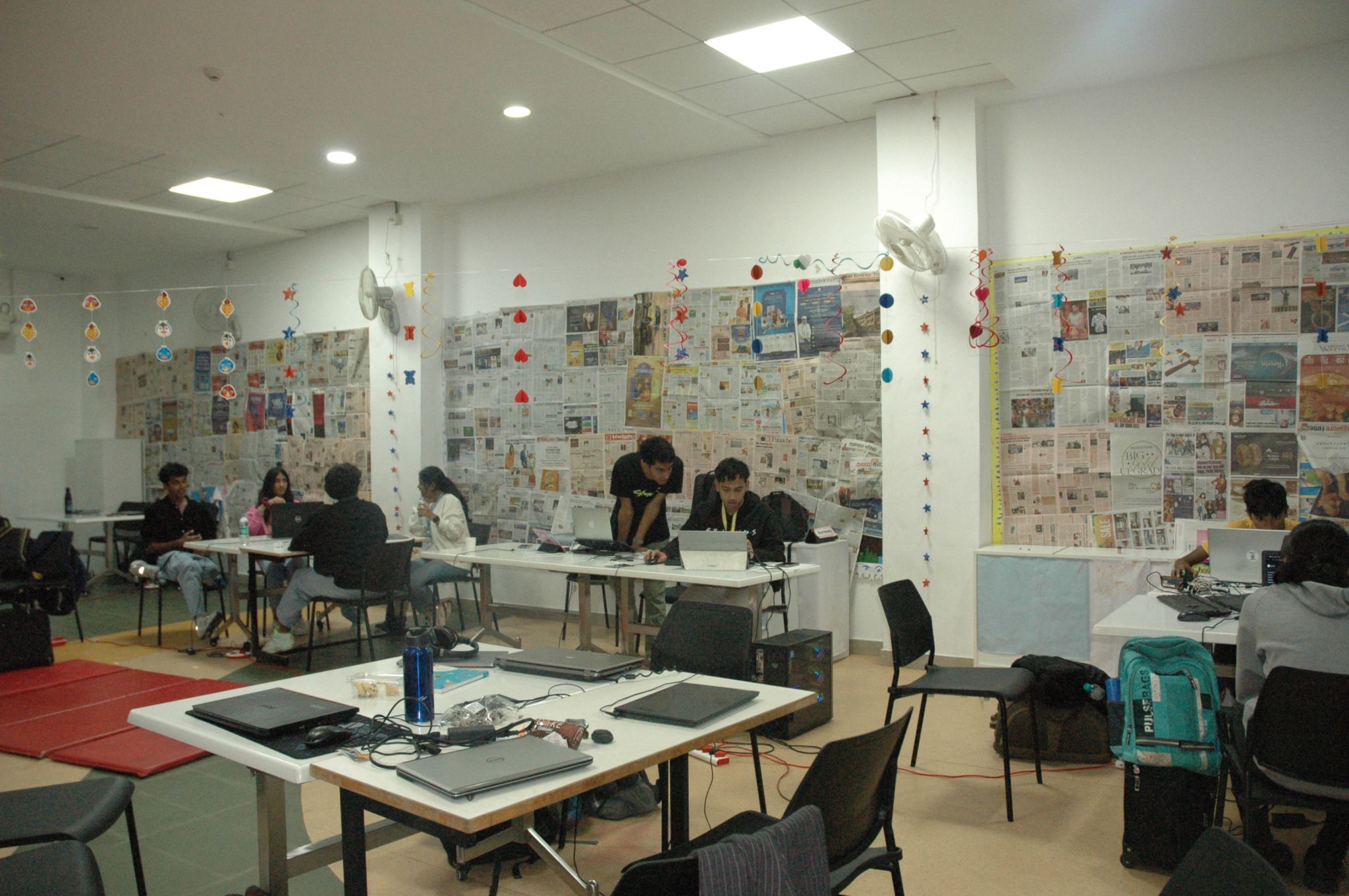
I'm Sparsh Bothra, a recent third-place winner at a hackathon with over 200 participants at Oakridge International School Bangalore. In this article, I'll share the five-step process my team and I used to brainstorm a winning idea, complete with side-by-side examples.
Table of Contents
- Introduction
- Critically Analyze the Provided Themes
- Find a Problem and a Specific Niche That Fits Under the Theme
- Choose a Combination of Solutions That Fit Your Requirements
- Question Yourself and Your Idea - Find the Achilles Heel in Your 'Perfect' Idea
- Build on Your Idea
- Conclusion
Step 1: Critically Analyze the Provided Themes
Begin your ideation by understanding the themes. Are they health-related? About safety? Start by choosing the theme that sparks the most organic ideas for you, instead of looking for ideas under each category. Often, you'll want to select the theme that offers the most room for innovation within your time limit and technical skills.
For instance, at the Oakridge hackathon, we had five themes to choose from:
- Eco-Tourism
- Pedagogical Tools
- Urban Transit Solutions
- AI on Edge Computing
- Fin-Tech.
Each theme offered unique challenges and innovation opportunities. However, we found Pedagogical Tools to be the most appealing, offering a broad canvas for innovative solutions. Some themes, like Eco-Tourism, didn't seem to offer the same scope for meaningful innovation within the hackathon's constraints. So, we chose Pedagogical Tools as our primary theme and moved to step #2.
Step 2: Find a Problem and a Specific Niche That Fits Under the Theme
Hackathons test not only your technical ability but also the real-life applicability of your solution. To ensure your idea's relevance, find a niche within your chosen theme. Identify the stakeholders and a niche issue relevant to the theme. For instance, having chosen the theme of pedagogical tools, my team aimed to create a solution to provide quality education to the impoverished.
But how can we progress in such a saturated industry? By delving deeper into the problem. List out the reasons why the problem exists, and you'll soon find unique core causes.
At my hackathon, we identified a major concern: the disproportionate number of tutors in Tier 1 and 2 cities compared to the geographic spread of the less fortunate. This led us to the idea of a platform connecting underprivileged students with available volunteer tutors. Now we had a unique, real, and sellable niche that tackled the theme and issue at hand.
Step 3: Choose a Combination of Solutions That Fit Your Requirements
Almost anything you're thinking of creating likely already exists. To make your idea unique and sellable, you need a combination of solutions that work together to accomplish a certain goal.
Take my hackathon product as an example. We ideated solutions to connect underprivileged students with volunteer tutors and landed on a web application for online video chats. But while that sounds great, it's not enough. We've all used Zoom, Google Meets, and Microsoft Teams. What sets us apart?
The better question is if this solution would satisfy a client. The answer is no, because it doesn't solve the fundamental issue - providing quality education.
So, we delved deeper into the problem, paired multiple solutions together, and it finally clicked. How about pairing a learning management system with it? A system where students and teachers create their own accounts, students view teacher availability and request online meetings, and teachers provide tasks to students for completion and grading.
Suddenly, we transformed an online meeting web application into an educational ecosystem for underprivileged children to gain access to quality education by connecting them to volunteer tutors.
Step 4: Question Yourself and Your Idea - Find the Achilles Heel in Your 'Perfect' Idea
A common issue, especially among entrepreneurs, is tunnel visioning, where we become so engrossed in our ideas that we overlook their flaws.
Analyze your solution critically:
- Does it address the niche and problem you identified?
- Does it consider the stakeholders related to the problem?
- Does it align with the theme and its description you selected?
If not, figure out why and how you can adjust it. If it does, evaluate your idea and solution from the judging panel's perspective.
Consider the judging criteria, which often include:
- Feasibility
- Difficulty
- Relation to the themes
- Quality of the implementation
- How innovative the solution is
During my Hackathon, my partner and I identified two major flaws in our solution, our Achilles' heels: the potential language barriers between tutors and students, and the source of education when tutors are unavailable. We were able to identify these issues by critically evaluating the feasibility of the solution, and understanding that the number of underprivileged students seeking education will always exceed the number of volunteer tutors available.
Now while it may seem like you've hit a wall, most issues you identify can be resolved with a few modifications, as we'll explore in the next step.
Step 5: Build on Your Idea
In this step, tackle each identified problem one at a time, seeking simple, minimally disruptive solutions. This step relies purely on your critical thinking skills and your prior knowledge on the problem you're investigating. For reference, here's how we took on ours.
We addressed the issue of language incompatibility between tutors and students. We decided to collect language preferences when creating accounts for both students and tutors, ensuring that students only see tutors with matching language preferences when they search. One problem solved, what next?
Next, we tackled the issue of tutor availability. Given the larger number of underprivileged students compared to volunteer tutors, we needed a feasible solution for providing quality education. We employed an AI based on the GPT 4 Turbo LLM model as a substitute tutor when real tutors are unavailable, ensuring it could effectively teach students. We also made the AI extremely usable by implementing features like image input, chat history recognition, Text to speech, and Speech to text.
Despite these significant changes, we minimized the magnitude of changes to ensure our solution was rock solid and undisputable.
Conclusion
Navigating through a hackathon mirrors the challenges we face in our hyper-competitive world. It's a testament to the power of critical thinking and its universal application. I hope my journey provides you with insights for your own problem-solving endeavors.
If you're interested in the code for our product, feel free to email me at Sparshbothra1@gmail.com.
Happy Hacking!






No comments yet, but you can be the first (Click me)!